
How good is your tap water?

tap-water

B. POOLE

Published: 03.29.2006

You might not be getting what you think you’re getting when you fill your water glass from the tap.

Despite the common perception that we’re all drinking Colorado River water, many Tucsonans get very little of it, and thousands of us get none.

Because our water comes from the Central Arizona Project canal and scores of wells across the metro area, your water and the way it tastes might be very different from your friends’ across town.

Tucson Water’s CAP-groundwater blend is pumped mostly to midtown, but residents in the foothills and outlying areas get mostly – in some cases exclusively – well water.

Midtown resident Kona Morgan thinks city tap water tastes “disgusting.”

“I drink a lot of lemonade, and you can really taste the difference,” the 35-year-old housekeeper said.

The mineral content of city water – the main factor in how water tastes – is expected to rise over the next decade as we introduce more CAP water. Tucson Water wants the City Council to set a mineral content target this year so it can plan for construction and new treatment equipment.

East Side resident Mario Terán, 45, buys bottled water for his wife and kids, but he doesn’t see the point.

“Me, I can’t tell the difference,” he said.

Minerals vary widely

The minerals in your water – known as dissolved solids – determine taste, hardness and the amount of white stuff left behind in sinks, showers and appliances.

CAP water, roughly a fourth of the 90 million gallons we use every day this time of year, had 738 parts per million dissolved solids in a sample taken Feb. 14. January well-water tests in and around Tucson showed dissolved solids ranging from 182 to 627 ppm. The city average, including the CAP-groundwater blend, was 340 ppm among January tests and 297 ppm for 2004.

High mineral content prompted local cook Francisco Bedoya, 50, to give up tap water about four years ago. His brother, a doctor in Mexico , advised the move, he said.

“I live with my mother, who is 86 years old, and he suggested it. It’s better for her,” Bedoya said.

The Environmental Protection Agency has identified no health risks from water with high mineral content, so the EPA has no health standard. The standard for aesthetics – taste, appearance and odor – is 500 ppm.

The No. 1 factor for consumers is taste, said Daniel Quintanar, manager of Tucson Water’s Environmental Monitoring for Public Access and Community Tracking program, which gets water quality information to the public.

“If it tastes good, generally people won’t question it. If it tastes funky, they will,” he said.

The city’s current mineral content target, based on taste tests and surveys, is a maximum 450 ppm. Tucson Water can maintain that level for many years by blending CAP water with groundwater. Eventually, more treatment will be needed to keep dissolved solids down.

Tucson Water has pegged the cost of keeping the 450-ppm dissolved minerals level through 2030 at between $393 million and $541 million, including new equipment and operating costs. Letting the mineral content gradually rise to 500 to 650 ppm – Tucson Water’s recommendation – would cost between $143 million and $229 million for the same period, the plan says.

How rates would be affected would be determined later. Tucson Water plans to hold meetings this year to gather input from the public on how to proceed.

Where do you live?

What you get depends on where you live.

Water from wells along the Santa Cruz River generally has a mineral content above 500 ppm. Water pumped on the city’s North and East sides has generally less than 250 ppm. Water pumped between Interstates 10 and 19 generally has dissolved solids from 250 to 500 ppm. The CAP-groundwater blend, mixed in the aquifer in Avra Valley , showed an average 325 ppm in February tests.

The CAP blend flows into the city near

29th Street

and Alvernon Way . But because it’s expensive to pump water uphill, the city keeps most of that water at lower elevations and lets wells handle higher areas, said Ray Wilson, administrator of Tucson Water’s Operations and Maintenance Division.

Well water and Avra Valley water blend in the system, but the exact mix at any given home is impossible to determine without chemical tests.

“The closer you are to 29th and Alvernon, the more your water is going to be influenced by water that is imported into the system,” Wilson said.

Thousands of Tucson Water customers living on the North, Northwest, Southwest and Southeast sides get only well water because their water systems are not connected to the main array of city pipelines, said Tucson Water spokesman Mitch Basefsky.

Homes in the upper reaches of the Santa Catalina Mountains foothills – some of which are 1,500 feet above the valley floor – normally get only well water, Basefsky said.

Generally, the higher you live, the less CAP water you get.

What’s in it?

No matter where you live, you are not drinking pure water – even if you buy bottled water. You also might be getting a bit of hexachlorocyclopentadiene, bromodicholoromethane, dibromoacetic acid, uranium or other regulated contaminants found in Tucson ‘s water in 2004.

The city tested tap water at about 470 sites in 2004, including 56 homes. Results go to the state Department of Environmental Quality, which monitors compliance with government rules.

Among 12,866 individual tests in 2004, only 8 percent of samples had detectable contaminants. All were below the federal maximum contaminant levels.

The “contaminants” don’t scare Bridwell Williams, a 62-year-old retired University of Arizona employee who drinks tap water but buys bottled water to keep scale out of her coffee maker.

“I think there are important ingredients in tap water. One of the best things about Tucson water is the natural fluoride,” she said.

Fluoride, which many cities add to water to guard teeth against cavities, occurs naturally in local groundwater.

Info available

An interactive map on Tucson Water’s Web site allows residents to check test results for samples taken in their neighborhood. The information includes hardness, dissolved solids, pH, temperature and other data Tucson Water customers have said in surveys that they want to see.

Despite all the information assuring her that her tap water is safe, East Side resident Kelly Blodgett, 40, isn’t taking any chances. She doesn’t trust Tucson Water because of the 1990s CAP issues, and natural health guru Dr. Andrew Weil advises drinking bottled water.

She’ll keep buying about 15 gallons a week for herself and her 3-year-old daughter for the better taste and possible health benefits, she said.

Her cat will continue to get tap and bottled water because he has no preference.

“But he might not be a good example, because he drinks from the toilet.”

Dr. Bob’s Blog is not intended as medical advice. The writings and statements on this website have not reviewed and/or approved by the FDA. Our products are not meant to diagnose, treat, cure or prevent any disease. Rather they are meant to demonstrate that aging can be slowed and even reversed and that Great Health achieved when the most fundamental nutritional needs of the human body are met. Always consult a medical doctor or other medical professional when you consider it necessary.
Dr. Bob’s Blog is covered under (47 U.S.C. § 230): “No provider or user of an interactive computer service shall be treated as the publisher or speaker of any information provided by another information content provider”.
Posted in Newsletter Archives | Tagged , , , , , , | 1 Comment

Fluoride Poisons The Fruit Juice Your Drinks

kids

Kids are being exposed to harmful fluoride in what some believe are the most unlikely places and the formation of their teeth explains why, according to the Iowa Fluoride Study of some 400 kids tracked from birth through age 13.

More than a third of the children examined in the Iowa study suffered from generally mild cases of dental fluorosis , evidenced by the white streaks on their teeth. That number should alarm parents, considering the CDC reports only 22 percent of American children have dental fluorosis .

The main health-harming culprits should sound very familiar to you: 100 percent fruit juice and infant formula.

Tooth problems aren’t the only health connections to fluoride, as it has been also linked to cancer, low IQs, genetic disorders and muscle degeneration.

If you’re at all skeptical about the harm fluoridation can do, consider this: Eleven employee unions connected to the EPA have argued for a moratorium on such programs and have asked the federal agency to recognize its cancer-causing risks.

Dr. Bob’s Blog is not intended as medical advice. The writings and statements on this website have not reviewed and/or approved by the FDA. Our products are not meant to diagnose, treat, cure or prevent any disease. Rather they are meant to demonstrate that aging can be slowed and even reversed and that Great Health achieved when the most fundamental nutritional needs of the human body are met. Always consult a medical doctor or other medical professional when you consider it necessary.
Dr. Bob’s Blog is covered under (47 U.S.C. § 230): “No provider or user of an interactive computer service shall be treated as the publisher or speaker of any information provided by another information content provider”.
Posted in Newsletter Archives | Tagged , , , , , , , , | Leave a comment

Why we don’t sell supplements

I just attended an intensive live blood analysis workshop last weekend in Chicago. Seeing your blood under a 40x microscope is a fascinating window into your body. Although it is not at all conclusive about what you are looking at and it should not be used as a diagnostic, you can determine whether you are healthy in general. For instance, if your blood cells stick together, which is known as Rouleau Disease, it may be an indication of several different diseases. It would be impossible to determine what disease one actually had from seeing blood cells that are problematic. People who conduct live blood analysis will show someone their blood then recommend several different supplements, probiotics and food enzymes. In short, you are still shooting in the dark. When you look at live blood, the condition of the blood cells, platelets, B-cells and T-cells, and observe that they do not look healthy, you can make several suggestions a s far as to how the person can correct the problem. Invariably, this includes the use of supplements and digestive enzymes of every imaginable kind. I have purchased a microscope and begun doing this work as well. It is absolutely fascinating to view live blood, but it fails as a true diagnostic tool because it cannot determine exactly what the problem is. For instance, you may see evidence of excessive oxidation, however it cannot be determined exactly what caused it. When I do a live blood viewing, I use it as a tool to allow people to see what is going on inside them. When they ask what they should do to correct the problem, I always suggest the same thing, raw foods , spirulina , chlorella , ionized water , probiotics and exercise. Supplements don’t work. They are a Band-Aid, not a solution. That’s why we don’t sell any at The Watershed Wellness Center.

Dr. Bob’s Blog is not intended as medical advice. The writings and statements on this website have not reviewed and/or approved by the FDA. Our products are not meant to diagnose, treat, cure or prevent any disease. Rather they are meant to demonstrate that aging can be slowed and even reversed and that Great Health achieved when the most fundamental nutritional needs of the human body are met. Always consult a medical doctor or other medical professional when you consider it necessary.
Dr. Bob’s Blog is covered under (47 U.S.C. § 230): “No provider or user of an interactive computer service shall be treated as the publisher or speaker of any information provided by another information content provider”.
Posted in Bob McCauley, Newsletter Archives | Tagged , , , , , , , , , , | Leave a comment

Dangerous Doctors

March 15, 2006

By: Bob McCauley

Physicians do make mistakes.  All doctors make Hippocrates’ promise to “First, do no harm.” However, the medical profession was the third leading cause of death in 2002. [i] The first and second causes of death were cancer and cardiovascular disease. 106,000 people died from the negative effects of pharmaceuticals; [ii] 80,000 people died from infections in hospitals; [iii] 20,000 people died from errors made while in the hospital; [iv] 12,000 died due to unnecessary surgery; [v] 7,000 died due to medication errors in hospitals. [vi] Going to see a doctor can be a dangerous proposition.  You are 9000 times more likely to accidentally be killed by a doctor than by a gun. [vii]  The alternative is making sure we don’t have to go to the doctor’s office or hospital in the first place.

The human body does not make mistakes.  If provided with the right materials, it operates perfectly and the medical establishment instantly becomes obsolete in the treatment of chronic disease.  Essentially, we are the architects of our own body.  We sculpt it into the shape that we want it to be by exercising and putting foods in it that are either nutritious or harmful.  If we are overweight and have health problems it is because our diet is comprised primarily of cooked foods, which never satisfy our hunger, thus we overeat.

[i] To Err Is Human: Building a Safer Health System . Kohn L, ed, Corrigan J, ed, Donaldson M, ed. Washington , DC

: National Academy Press; 1999.

[ii] Ibid.

[iii] Incidence of adverse drug reactions in hospitalized patients: a meta-analysis of prospective studies .  Lazarou J, Pomeranz BH, Corey PN.  Journal of the American Medical Association (JAMA) 1998 Apr 15;279(15):1200-5

[iv] Ibid.

[v] Unnecessary surgery . Leape LL.  Annual Review of Public Health. 1992;13:363-83  Department of Health Policy and Management, Harvard School of Public Health, Boston, MA 02115.

[vi] Increase in US medication-error deaths between 1983 and 1993 .  Phillips DP, Christenfeld N, Glynn LM.   Lancet. 1998 Feb 28 ;351 (9103):643-4.

[vii]  Number of physicians in the US = 700,000
Accidental deaths caused directly by physicians per year = 120,000
Accidental deaths per physician = 0.171

Number of gun owners in the US = 80,000,000
Number of accidental gun deaths per year (all age groups) = 1,500
Accidental deaths per gun owner = 0.0000188

To Err Is Human: Building a Safer Health System Kohn L, ed, Corrigan J, ed, Donaldson M, ed.  Washington , DC : National Academy

Press; 1999

Dr. Bob’s Blog is not intended as medical advice. The writings and statements on this website have not reviewed and/or approved by the FDA. Our products are not meant to diagnose, treat, cure or prevent any disease. Rather they are meant to demonstrate that aging can be slowed and even reversed and that Great Health achieved when the most fundamental nutritional needs of the human body are met. Always consult a medical doctor or other medical professional when you consider it necessary.
Dr. Bob’s Blog is covered under (47 U.S.C. § 230): “No provider or user of an interactive computer service shall be treated as the publisher or speaker of any information provided by another information content provider”.
Posted in Bob McCauley, Newsletter Archives | Tagged , , , , , , , , , | Leave a comment

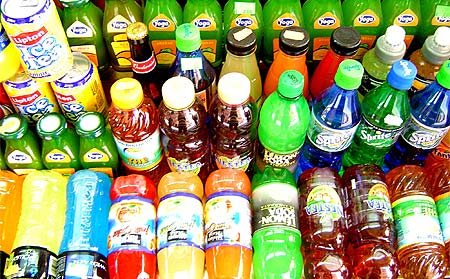
FDA finds benzene in soft drinks

soft-drinks-lg

BY DAVID GOLDSTEIN

Knight Ridder Newspapers

WASHINGTON- When small amounts of benzene, a known cancer-causing chemical, were found in some soft drinks 16 years ago, the Food and Drug Administration never told the public.

That’s because the beverage industry told the government it would handle the problem and the FDA thought the problem was solved.

A decade and a half later, benzene has turned up again. The FDA has found levels in some soft drinks higher than what it found in 1990, and two to four times higher than what’s considered safe for drinking water.

Both the FDA and the beverage industry said the amounts were small and that the problem didn’t appear to be widespread.

“People shouldn’t overreact,” said Kevin Keane, a spokesman for the American Beverage Association. “It’s a very small number of products and not major brands.”

“The issue here is not something that should cause anyone alarm or terrific concern,” said George Pauli, a top food safety expert at the FDA, “but if there’s something that can be reduced, we want to reduce it.”

Neither Keane nor Pauli would identify the drinks being tested because the investigation is still under way.

Pauli said that people ingest more benzene by breathing than they would if they drank a can of soda containing the chemical. Small amounts of the chemical also are naturally present in some foods such as fruits, vegetables and dairy products.

Still, Pauli added, “You want to avoid it in any degree you can.”

Of the 60 or so varieties of sodas, sports drinks, juice drinks and bottled waters that the FDA has tested so far, benzene levels have ranged from two and three parts per billion to more than 10-20 parts per billion.

The Environmental Protection Agency’s safety standard for benzene in drinking water is five parts per billion. If it exceeds that, authorities are required to notify the public.

Keane said it was “tough to compare” the safety standard for water with soft drinks because the water rule is based on the fact that people drink more water each day.

Benzene is an industrial chemical that’s found in tobacco smoke, car exhaust and vapors from household products such as paint, detergents and furniture wax. Long-term exposure can cause leukemia and other cancers of the blood, according to the Centers for Disease Control and Prevention.

Benzene can show up in soft drinks when two common ingredients react: ascorbic acid, otherwise known as vitamin C, and either sodium benzoate or potassium benzoate. Both are preservatives used to prevent the growth of bacteria.

But the presence of these chemicals doesn’t necessarily produce benzene.

“It’s not as simple as looking at the label, and if you see those two, there will be problems,” Keane said.

Pauli said that a catalyst such as temperature or light is needed to trigger the formation of benzene. That’s what scientists suspect occurred in 1990 when authorities found benzene in products made by Cadbury Schweppes and Koala Springs, an Australian beverage company.

But a health safety watchdog organization said the FDA should inform the public, particularly since so many soft drinks are marketed to children.

“Most people would prefer there are no known human carcinogens in what they drink,” said Jane Houlihan, vice president for research at the Environmental Working Group, a nonprofit, nonpartisan scientific research group that studies toxic chemicals. “This is a case where industry agreed to get it out of the products, and all the evidence says they didn’t.”

Soft drink manufacturers PepsiCo and Coca-Cola declined to comment and referred calls to the American Beverage Association.

When benzene first turned up 16 years ago, FDA officials met with representatives of the beverage industry who “expressed their concern about the presence of benzene traces in their products and the potential for adverse publicity associated with this problem,” according to an internal FDA memo from December 1990.

Keane said the industry told the FDA that it was reformulating its products to alleviate the problem. Adding sugar, for instance, or replacing the vitamin C, can inhibit the chemical reaction that produces benzene, Pauli said.

An FDA official who asked not to be identified said that the agency didn’t inform the public about the benzene problem 16 years ago because it didn’t consider it a public health concern since the levels were low and the companies were reformulating.

He said the FDA conducted follow-up testing in the early 1990s, but not since because “we thought the problem was gone and over. Then it resurfaced.”

The current investigation began when an activist concerned about soft drink machines in schools tried to get the FDA interested in the issue. He then sent lab results showing some soft drinks with higher-than-normal benzene levels.

“Our first reaction was, `Yes, we looked at this in 1990 and essentially there was nothing there,'” Pauli said. “Then he came up with some numbers and we said, `That’s not what we came up with back then. We have to go back and look.'”

Asked why the problem would resurface 16 years later, Keane said the industry took the necessary steps at the time, but it’s possible some manufacturers just didn’t know.

“It’s a very fast-growing industry, both in terms of companies and new brands, so a lot has changed in the last 16 years,” he said.

Food safety authorities in Great Britain and Australia also are testing soft drinks for benzene.

Dr. Bob’s Blog is not intended as medical advice. The writings and statements on this website have not reviewed and/or approved by the FDA. Our products are not meant to diagnose, treat, cure or prevent any disease. Rather they are meant to demonstrate that aging can be slowed and even reversed and that Great Health achieved when the most fundamental nutritional needs of the human body are met. Always consult a medical doctor or other medical professional when you consider it necessary.
Dr. Bob’s Blog is covered under (47 U.S.C. § 230): “No provider or user of an interactive computer service shall be treated as the publisher or speaker of any information provided by another information content provider”.
Posted in Newsletter Archives | Tagged , , , , , , , , , , , , | 1 Comment

Skin Test – March 14, 2006

By: Bob McCauley

I was tested for skin carotenoids last weekend while attending the Arnold Fitness Classic in Columbus , Ohio , which was a total bust this year.  But a highlight for me was stopping by a booth that was offering the scan which uses a

low-energy blue light laser to obtain an immediate reading of the carotenoid antioxidant levels in your skin-your Skin Carotenoid Score.  The unit is made by Pharmanex.  The skin is a particularly accurate measurement of our health because it takes approximately 30 days for nutrients to reach the skin, whereas something like the blood is more immediate and subject to sudden change.

The person who was testing knew nothing about the machine he was using, but did know about the supplements that he was selling.  He didn’t even know what the laser was measuring in my skin, but he did say there was no upper limit.  According to him, his score was quite low, only 20,000.  However, he had only started on the supplements he was selling a month earlier and they not had too much time to work.  He explained that a score of 35,000 was good and 40, 000 was exceptional.  He was working with a young lady who had a score of nearly 36,000 after taking the supplements for a year.  I filled out their questionnaire that asked if I took supplements of any kind and if not why.  I stated that I ate raw fruits and vegetables because they were far healthier than any supplements that could possibly be consumed.  The test only took a couple minutes and when my score came back 59,000, the man taking it was astonished.  His chart only went to 50,000.  He had never heard of anyone getting over 50,000.  Even the founder of the company only had a score of 48,000.  He asked what my diet was comprised of and I told him I was on a 99% raw food diet.  I didn’t see a light bulb come on over his head, but one should have.  It is raw fruits and vegetables that give us youth, great skin full of antioxidant and incredible energy, not supplements.  Supplements are extracts and concentrates that look good on paper but can’t supply the body with the full nutritional compliment if it is not consumed raw.  Supplements slightly prolong the inevitable slide toward old age and disease.  Raw foods lead away from that “inevitability”.  They are the only thing that gives you life and evidence of that is a carotenoid score of 59,000.  Best of all, I am no one special.  ANYONE can do what I am doing even if you are just getting started!

Dr. Bob’s Blog is not intended as medical advice. The writings and statements on this website have not reviewed and/or approved by the FDA. Our products are not meant to diagnose, treat, cure or prevent any disease. Rather they are meant to demonstrate that aging can be slowed and even reversed and that Great Health achieved when the most fundamental nutritional needs of the human body are met. Always consult a medical doctor or other medical professional when you consider it necessary.
Dr. Bob’s Blog is covered under (47 U.S.C. § 230): “No provider or user of an interactive computer service shall be treated as the publisher or speaker of any information provided by another information content provider”.
Posted in Bob McCauley, Newsletter Archives | Tagged , , , , | Leave a comment

pH is Critical to Our Health

By Bob McCauley, CNC

Our diet has changed radically over the last seventy years. We have abandoned our time-honored balanced diet of raw fruits and vegetables. The advent of processed foods, and the mania over fast foods and junk foods has changed all that. We no longer eat foods that contain natural enzymes; they have either been cooked, pasteurized or otherwise processed out of our food and therefore out of our diet. Without enzymes, our bodies cannot take in vital nutrients. For instance, there are the familiar stories of old ladies who seemingly fall down and break their hips. Come to find out all those old ladies did not fall down at all. Rather, their hip bone snapped and they fell over. Because of the lack of proper nutrition and the necessary enzymes, their bodies lost the ability to take in calcium, a condition known as osteoporosis . Once our bodies become depleted of enzymes, it becomes increasingl y difficult to take in nutrients. If our organs must devote a large portion of their enzyme manufacturing potential to making digestive enzymes, it weakens the whole body.

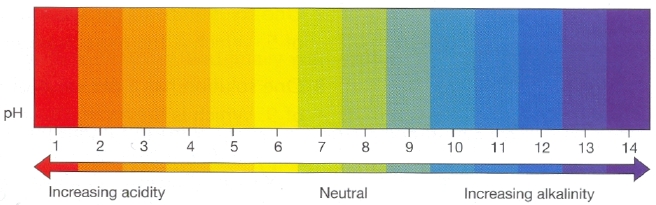
However, what make this situation worse is that processed foods, fast foods and junk foods create an acidic condition in our bodies that over time becomes an ideal environment for diseases to start. For instance, cancer does not live well in an alkaline environment but flourishes in an acidic environment. What we consume either raises or lowers our body pH (pH relates to acidic and alkaline), which should be between 7.2-7.4 pH. For example a soft drink such as a cola has a pH of 2.7-3.0, which is extremely acidic! A soft drink with a pH of 3.0 is going to have a much higher pH after it has passed through the body; it is going to have close to the same pH as your body, about 7.0. It reached that pH level by stealing precious minerals and fluids from your body! Putting soft drinks and other high acid foods in your body lowers your body’s pH making it more acidic, thus more suseptible to disease. It does not gi ve you disease; rather it helps to create the ideal environment for any disease that may come along to get a foothold, may it be environmental, genetic, diet related or by other means. The vast majority of cancer patients possess a very low body pH, ranging from 6.0-5.0 or lower. Our bodies simply can not fight disease if the our body pH is not properly balanced.

In short, our diet is killing us. One in three people in the United States will get cancer in their lifetime. These are staggering statistics, yet if you look at the rise of processed, over cooked, fast and junks in this country, you will notice the rates of cancer and other diseases rising at the same rate.

The question remains: what to do about this situation. There is something we can do about it.


Measuring Body pH

pH is a measurement of the relative concentration of positive and negative ions.  When they are present in equal quantities we have reached a state of equilibrium within the body and our pH will be 7.0.  There are two ways to measure body pH, which should not be confused with blood pH.  The blood always maintains pH between 7.25 – 7.45.  If it falls out of that range the body will quickly go into shock and death will follow soon after.  Anything that does get into the bloodstream outside of that pH is immediately pushed out into the body’s tissue.

Body pH
The pH of saliva and urine is a much more accurate measure of overall body pH.  I believe that the pH of the body should be approximately 7.0, which is neutral.  There are many opinions of what the pH of the body should actually be.  I have read as low as 6.3 and as high as 7.2.  If you are sick your body pH will be low.  The sicker you are the lower your pH will be.  For instance, if you have advanced cancer your body pH will most likely be near 5.0.

Tools for measuring pH

Body pH can be measured using pH paper, pH indicator liquid (phenol red) or a digital pH meter.

Measuring with Saliva
The mouth tends to be slightly alkaline, which is why it is a poor barometer of the overall pH of the body.  The saliva is a more accurate measure of the body from the waist up, which includes the upper digestive tract.  Therefore, it is not a good measure of overall body pH.  pH test strips are the only way to test saliva pH.

Measuring with Urine

Many things can affect body pH throughout each day, such as diet and stress level.  In order to get an accurate determination of body pH, the urine should be measured first thing in the morning each day for at least week, although a month would better.  As you continue to measure your pH each morning, a profile, or “moving average,” will emerge that will be far more accurate than taking a single reading.  Urine pH can be measured using pH paper, pH indicator liquid (phenol red) or a digital pH meter.

The Signs of Disease: Acidity and Toxicity

Dr. Bob’s Blog is not intended as medical advice. The writings and statements on this website have not reviewed and/or approved by the FDA. Our products are not meant to diagnose, treat, cure or prevent any disease. Rather they are meant to demonstrate that aging can be slowed and even reversed and that Great Health achieved when the most fundamental nutritional needs of the human body are met. Always consult a medical doctor or other medical professional when you consider it necessary.
Dr. Bob’s Blog is covered under (47 U.S.C. § 230): “No provider or user of an interactive computer service shall be treated as the publisher or speaker of any information provided by another information content provider”.
Posted in Bob McCauley, Newsletter Archives | Tagged , , , , , , , , , , | 3 Comments